A sportsbook is not competing with the book across town. It is competing with the guest’s own living room — which now has a very good screen, no parking, cheaper beer, and a couch.
That is the honest frame for game-day programming. Whatever a property puts in front of guests on a Sunday has to be something a television cannot deliver: other people, scale, and things that only happen there.
Below is how to think about programming a football Sunday, including the two windows most properties leave empty.
The shape of the season, since programming decisions hang off it. The NFL regular season runs 18 weeks — 17 games plus a bye for each team. The 2026 season opened on Wednesday 9 September (Patriots at Seahawks), which is worth noting because the opener is not always a Thursday. The regular season closes on 9–10 January 2027, wild card weekend is 16–18 January, and Super Bowl LXI is on 14 February 2027 at SoFi Stadium.
One detail that catches people out when they build a season plan: the primetime windows do not run the whole way. Thursday Night Football covers weeks 2 through 17, with the week 12 game moved to Black Friday, and Monday Night Football covers weeks 1 through 17. Neither runs in week 18.
Know which guests you actually have
Three groups arrive on a football Sunday, and programming that serves only the first leaves money in the other two.
The bettor. Watching one or two games with money on them. They need sightlines, a seat, and to be left alone. Entertainment placed in front of this guest during a game is an irritation, not an amenity.
The social group. Four to eight people who chose the property over someone’s house. They came for the occasion more than the game. This is the group that spends on food and drink, moves around, and decides whether the day was worth repeating.
The accompanying guest. Someone who is there because a person they came with wanted to be. They are the most under-served guest in the building on a Sunday and the one most likely to end the day early — taking the rest of the party with them.
Most properties program for the first group by default, because the first group is the one the sportsbook was designed for. The programming opportunity is in the second and third.
Pre-kickoff: the two hours nobody programs
For most books this is the cheapest available improvement to the day, and the one with the least competition for it.
Guests arrive well before kickoff to secure seats. Then they wait. During that window there is nothing on the screens they care about, nothing scheduled, and no reason to move — so they sit, order one drink, and hold their position.
Programming that window changes the shape of the entire day:
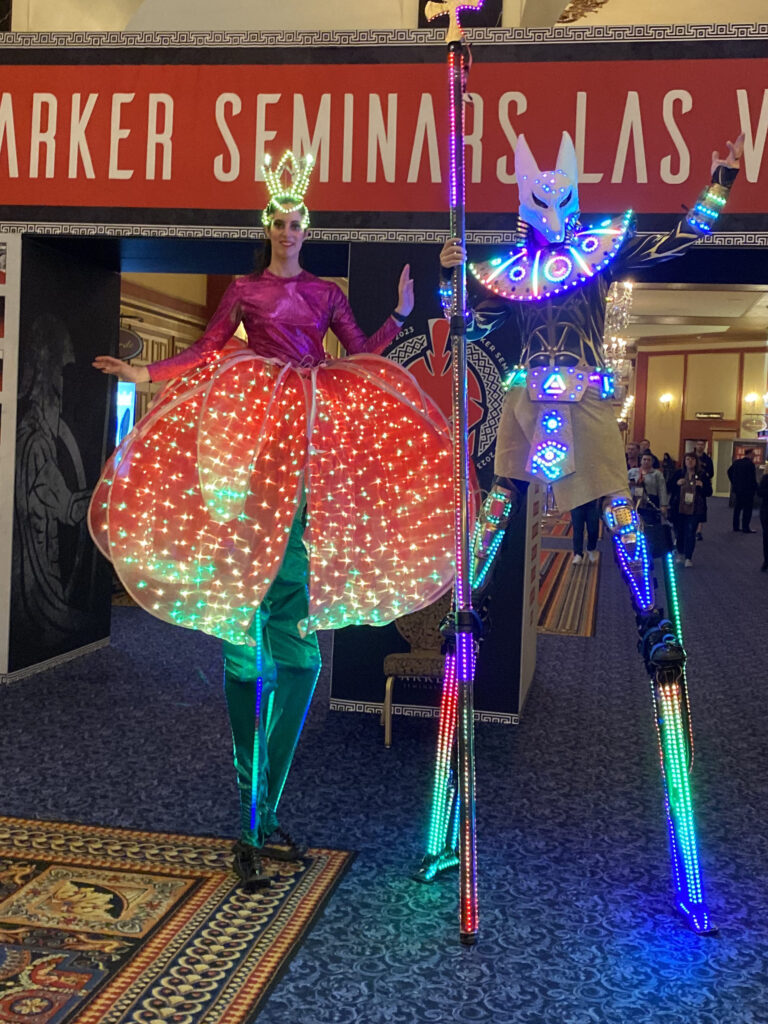
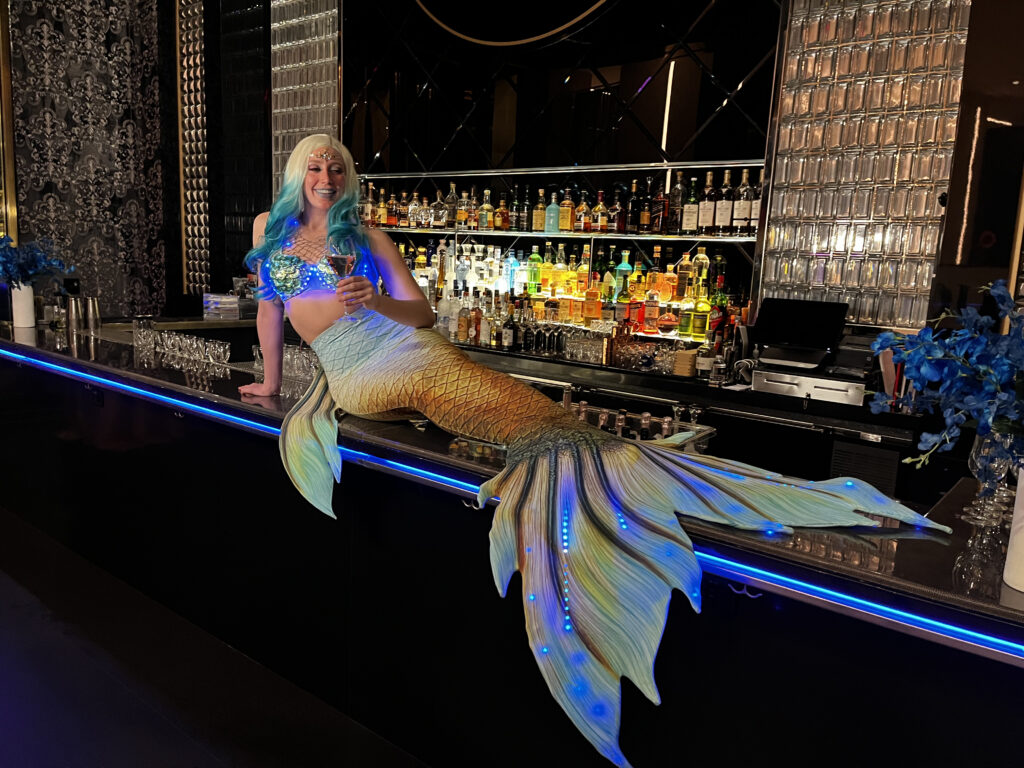
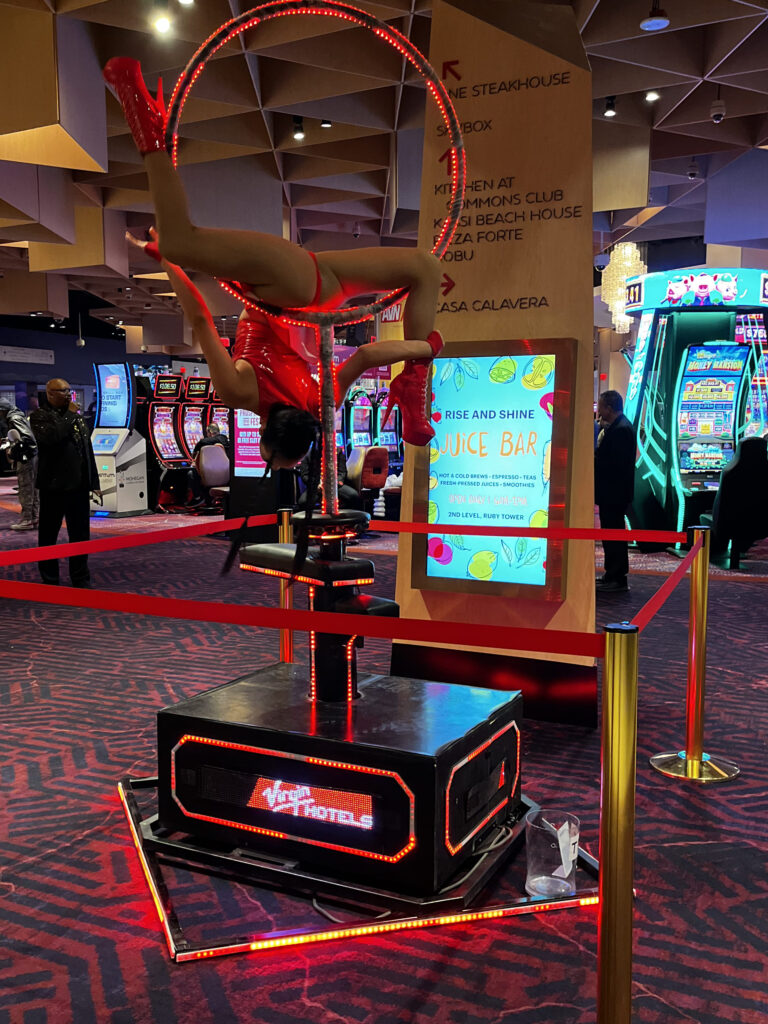
- Roaming entertainment through the book, the concourse and the adjacent bar, reaching guests who are seated and stationary.
- Interactive activations — skills challenges, oversized games, anything with a competitive element that suits the mood of the room.
- Photo moments built for the day, ideally with something guests want to send to the group chat they are not sitting in.
- Sponsor and brand activations, which is where a beer, spirits or sportsbook partner will happily fund the thing you were going to do anyway.
The strategic argument for owning the pre-game window: during the game, every book in the country is showing the same feed. Before kickoff, you are the only thing on. That is the part of the day where a property can actually differentiate.
Entertainment during the game
Be realistic. You cannot compete with the broadcast, and attempting it annoys the guests you most need to keep.
What works is filling the gaps the broadcast leaves:
Halftime. A defined window where attention is genuinely available. Short-format entertainment, a prize moment, an interactive segment. Ten minutes, high energy, over before the second half starts.
The gap between an early window and a late one. In a multi-game Sunday this is the longest stretch of unstructured time in the day, and it is when guests decide whether to stay for the late game or go home. Program it accordingly.
The concourse and the periphery, continuously. Away from the seating bowl, guests are moving, queuing and standing. Roaming entertainment works there all day without ever crossing in front of a screen someone is watching.
The rule: entertainment during a game belongs where people are standing, not where they are seated and facing a screen.
Program the space around the book, not just the book
Most of a property’s game-day opportunity is not inside the sportsbook. It is the adjacent bar, the concourse, the patio, the restaurant with the game on, and any overflow viewing area.
Two reasons this matters commercially. A book has a fixed seat count, which caps revenue if the book is the only place worth being. And the guests who end up in the overflow areas tend to be the social groups and accompanying guests rather than the seated bettors — which means the people furthest from the programming are often the ones with the loosest spend and the weakest reason to stay.
A property that programs the whole zone as one event, rather than treating the book as the event and everything else as spillover, gets a materially different day out of the same crowd.
Program for the guests who are not watching
The accompanying guest is the most overlooked person in the building on a football Sunday, and the one with the most influence over when the group leaves.
They did not come for the game. Somewhere around the middle of the second quarter they run out of reasons to be there, and when they decide to go, they rarely go alone — they take a party of four with them, and that party had another five hours of spend in it.
What serves them costs very little:
- Entertainment away from the screens. The bar, the patio, the retail concourse. Somewhere the day is happening that is not a television.
- Interactive activations they can actually join rather than watch, which is the difference between somewhere to wait and somewhere to be.
- A parallel offer — a spa slot, a dining reservation, a promotion running on the floor — that gives the group a reason to split up and reconvene rather than leave together.
The measurement that matters here is not attendance. It is how long the average group stays. A property that extends the average game-day party by ninety minutes has done more for its Sunday than one that added twenty people to the door count.
Thursday and Monday are a different product
Weeknight games get treated as a smaller Sunday and they are not.
The crowd is smaller, more local, and more likely to be regulars rather than a destination visit. There is one game rather than a full slate, which means a defined start and end rather than an all-day arc. And the guest is coming after work, so arrivals compress into a short window before kickoff rather than spreading across a morning.
That argues for a lighter, more consistent format — ambient entertainment in the bar and book, a reliable food and drink offer, and something that makes the room feel occupied rather than sparse. It also makes weeknight games a good, low-risk place to test programming before committing budget to a Sunday.
Making a regular Sunday feel different from last Sunday
This is the retention problem, and it is the one that separates a good game-day product from a great one.
A full season of identical Sundays trains your regulars to skip weeks. They are your most valuable game-day guests, they are the most exposed to repetition, and they are the first to notice that this week looks exactly like last week.
Three ways to build variation without rebuilding the day each time:
Rotate the entertainment, keep the structure. Same slots, same shape, different act. Guests keep the habit and lose the predictability.
Theme the weeks that have a reason. Rivalry games, primetime matchups, a visiting team with a local following. Pull your market’s schedule at the start of the season and mark the dates that carry their own story — most markets have several.
Escalate toward the end of the season. The energy of the day should build visibly across the season, so that a late-season Sunday is obviously bigger than an opening-weekend one. Guests notice the build even when they cannot articulate it.
What should stay constant is the slot, the general quality level, and anything guests have adopted as theirs. Rotation is about the act, not the ritual.
Scaling up for the weeks that matter
Not every Sunday deserves the same budget. A handful of dates each season justify significantly more — rivalry weekends, primetime home-market games, the final weeks with playoff implications, and championship weekend.
What changes on those dates is scale rather than kind: more programming across more of the property, a featured moment rather than only ambient entertainment, and the assumption of a full house rather than a good one.
The practical constraint is lead time. Talent for the largest football dates gets committed well before the date, and a property that starts looking a few weeks out is choosing from whatever is left rather than from what it wants.
A workable rule: treat the biggest dates on your football calendar the way you treat New Year’s Eve — decided and contracted months ahead, not weeks. Custom or branded elements need longer still, because they have a build timeline before they have a booking date.
For a sense of the money moving around the season you are programming against: the American Gaming Association estimates $29.5 billion in legal wagering on the 2026 NFL season through regulated US sportsbooks — essentially flat against the $29.4 billion of the season before. The single biggest day of the year is the championship: the AGA put legal wagering on Super Bowl LX at $1.76 billion.
Flat handle is worth sitting with. If the betting itself is not growing, the differentiator between your book and the next one is what the day feels like, not the odds.
What Las Vegas books do that a regional book can borrow
Las Vegas properties have been treating football Sunday as a full-property event for years, and much of what they do scales down.
Publicly documented examples worth studying — these are public programming at other properties, not LightRay projects — include Westgate Las Vegas’s Football Central, Circa’s football weekend programming, and Caesars Palace’s watch party formats.
The transferable ideas are not the budgets. They are structural: treat the whole day as programmed rather than just the game, give the pre-game window real content, extend the event well beyond the book itself, and give the day a name guests can repeat.
The talent question is separate from the structural one, and it is worth reading alongside this — why regional casinos book Las Vegas entertainment covers what out-of-market acts actually add and what the travel really costs.
A regional property will not replicate a Strip book’s scale. It does not need to. Most of what makes those days work is decisions about structure and sequencing, and those cost nothing.
Where to start this season
If you are programming a football Sunday for the first time, do the pre-kickoff window and nothing else. It is the cheapest part of the day to improve, the guests are already assembled and waiting, and it is the stretch your competition is not thinking about.
Then add one thing per month rather than building the whole day at once. A season is long enough to iterate.
LightRay is a Las Vegas entertainment and production company, and casino entertainment programming is what we build — roaming and illuminated performers, interactive activations, and branded moments made for a specific weekend rather than pulled off a shelf. If you are planning the rest of this season or already looking at championship weekend, we can talk through what fits your book, your spaces and your lead times. The broader guide to casino entertainment ideas covers programming beyond game day.