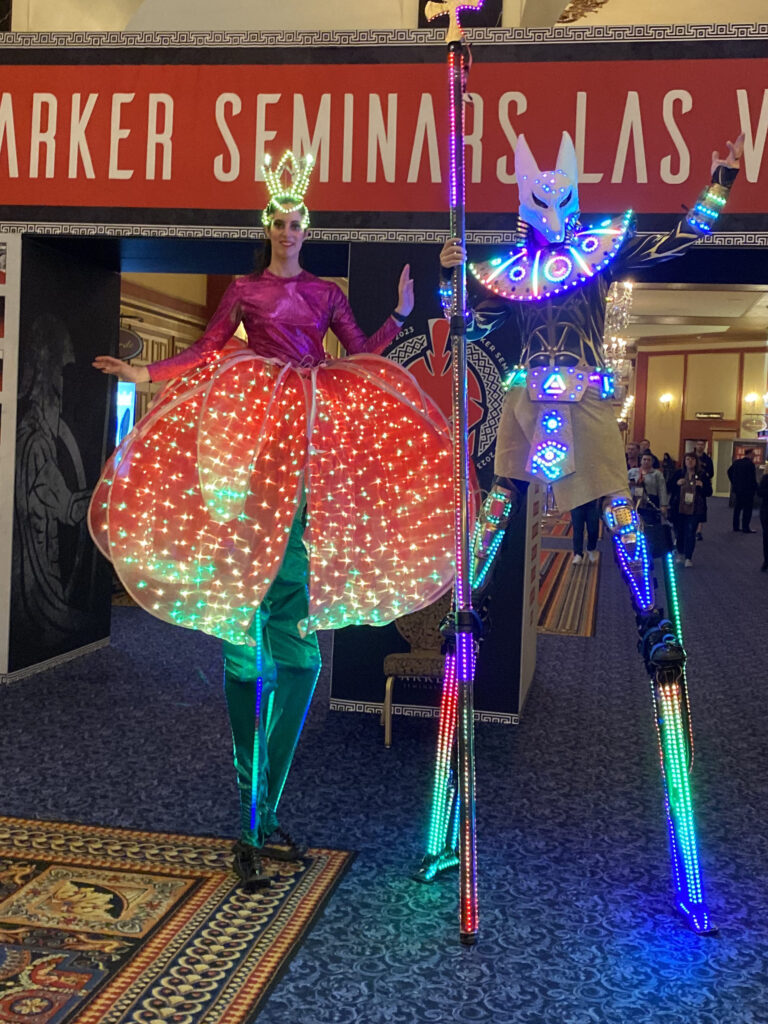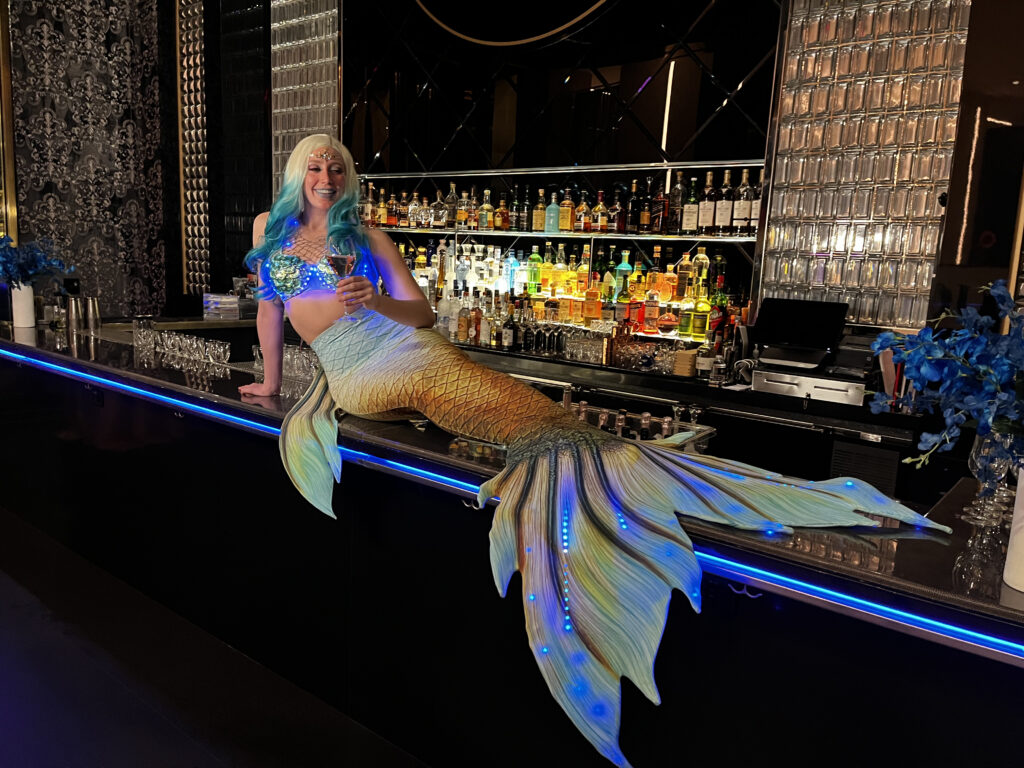
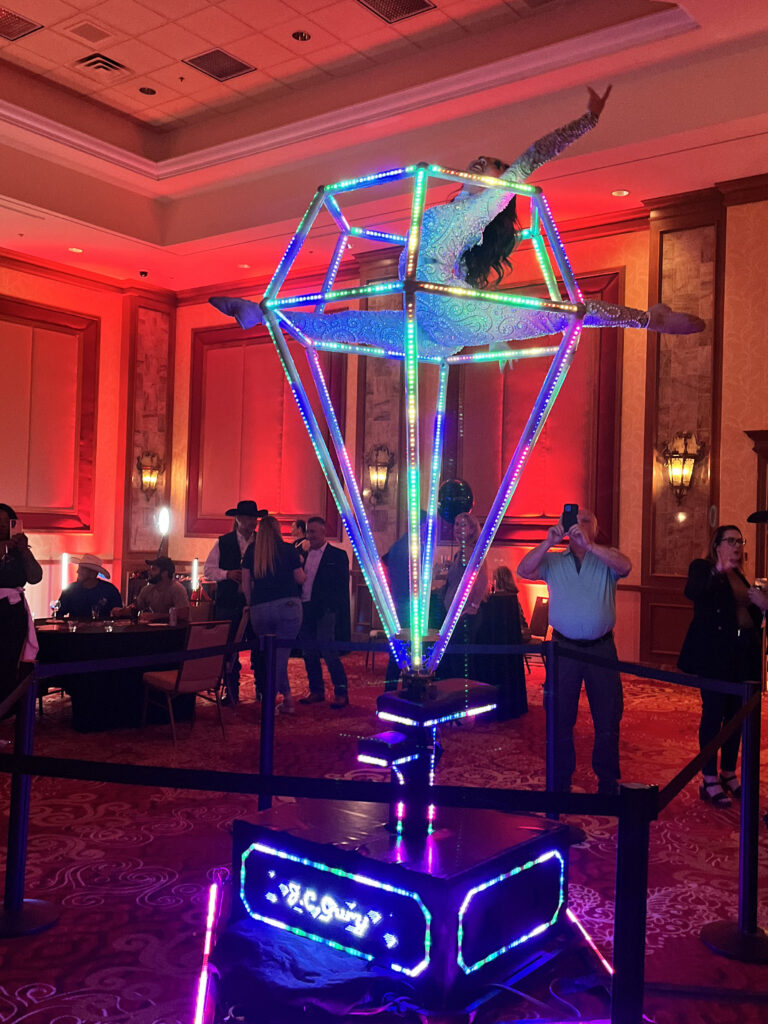
On most event sites, an entertainment failure means a disappointing evening. On a casino floor it means something else: a surveillance issue, an operations disruption, a compliance exposure, and a promotion that underdelivers in front of players your host team personally invited.
That raises the bar on vendor selection well past “do they have good performers.” This is a guide to vetting a casino entertainment company properly — the kinds of company you will encounter, the questions that separate them, and the things that should end a conversation.
It is written to be useful even if you end up hiring someone else.
The three kinds of company you will be talking to
They are not interchangeable, and the right choice depends on what you actually need.
Booking agencies. They broker talent they do not employ. Their value is reach — an agency with a large roster can find you a specific act for a specific date faster than anyone. Their limitation is that they are a layer between you and the people who show up, and they generally do not handle production, staging or build.
If you need one act, on one date, in a room that is already set up, an agency is often the right and cheapest answer. Nothing wrong with that.
Single-format specialists. A company that does one thing — one act type, one technology, one format — and does it very well. Excellent when that one thing is exactly what you want. Limited when you need a calendar, because everything they propose will be a version of the thing they sell.
Worth noticing when a company’s recommendation always resolves to their single product regardless of the question you asked.
Production and programming companies. They employ or directly manage talent, handle production and logistics, build custom elements, and can program across a season rather than filling a date. The trade-off is that they are usually not the cheapest option for a single simple booking.
If you are building recurring programming, running a promotional calendar, or need anything custom, this is the category. If you need one magician for one Thursday, it is not.
Casino experience is not the same as event experience
A vendor with a decade of weddings and corporate galas has genuinely relevant skills. They also have gaps that only show up on a gaming floor.
Things a company that has worked casino properties knows without being told:
- Surveillance sightlines. Props, staging and installations cannot obstruct a camera’s view of a gaming position. This gets plans rejected late if nobody raised it early.
- Noise tolerance near live gaming. There is a level above which a dealer cannot run their game, and it is usually lower than a vendor coming from ballroom and event work expects.
- Load-in around 24-hour operations. There is no closed window. Load-in happens around live play.
- Prop and costume standards. Properties have rules about coverage, about anything resembling a uniform or security presence, and about props that could be mistaken for something they are not.
- Vendor licensing. For tribal properties this is a formal process through the tribal gaming commission, with its own timeline and paperwork.
- Working with a host team. The entertainment often exists to give player development something to invite guests to. A vendor who does not understand that will optimise for the wrong thing.
The question to ask is not “have you done casinos.” Everyone says yes. Ask which properties, in what capacity, and what the property’s operations team required of them. The answer tells you immediately whether they have been through it.
If you are weighing a local company against one from a larger entertainment market, why regional casinos book Las Vegas entertainment covers what that trade-off actually involves.
Questions to ask before you shortlist
Group them, and ask all of them. A company that answers these well is demonstrating competence; one that deflects is telling you something.
On talent
- Do you employ these performers, directly manage them, or subcontract?
- Are the performers in your portfolio the performers who will be on my floor?
- What happens if someone cancels the day of? What is the substitution standard?
- How many performers of this type can you field at once, and on what notice?
On production
- What rigging, power and clearance does this require?
- Who supervises on site, and are they separate from the performers?
- What is the load-in and strike timeline, and how does it work around live play?
- What do you need from my facilities team, and when?
On compliance
- Can you provide a certificate of insurance naming the property as additional insured?
- Are your performers employees or independent contractors, and how does that affect coverage?
- Have you been through tribal gaming vendor licensing? For which commissions?
- What is your background check policy for personnel on property?
On scope
- Can you program a recurring series, or only individual dates?
- Can you rotate acts across a season so our regulars see something different?
- What does your involvement look like between bookings?
On custom work
- Can you build to a theme or a campaign, or only supply from an existing catalogue?
- What is the lead time on a custom costume or prop build?
- Who owns what you build?
That last question matters more than it sounds. If you commission something built around your property’s brand, establish upfront whether it can appear at the casino down the road next season.
Red flags
Plainly stated, because vague warnings do not help anyone.
No proof of insurance, or reluctance to provide it. This is not negotiable and it is not difficult for a legitimate company to produce.
A portfolio you cannot verify. Stock imagery, images that appear on other companies’ sites, or photographs with no identifiable venue. Ask where a specific image was taken and who the client was. A real answer is easy — ours is in the gallery.
No clear answer on who owns the talent. If a company cannot tell you whether the performer in the photograph works for them, they are brokering and calling it something else.
Pricing quoted before anyone asked about the space. A number produced before a discussion of ceiling height, footprint, power and duration is a guess, and the reconciliation happens later, in your favour or not.
Unwillingness to do a site visit for anything of scale.
No references from a gaming property. Corporate and wedding references are not equivalent. Ask specifically for a casino reference and call it. If a company cannot name a single gaming property it has worked, that is your answer.
Recommendations that never change. If every answer to every question is the same product, you are talking to a catalogue, not a partner.
How pricing works, and what actually moves it
Casino entertainment pricing varies enough that a published rate card would be misleading. What is useful is understanding the cost drivers, so you can tell whether a quote is reasonable and where it can flex.
The main ones:
- Performer count and act complexity. Usually the first place a budget scales up or down, and the lever with the most room in it.
- Custom build. Costumes, props and installations built for you are a design-and-fabrication cost separate from the performance.
- Travel and lodging for out-of-market talent — which is why booking several acts into one trip changes the economics substantially.
- Duration and set structure. Three thirty-minute sets across an evening is a different cost from one continuous four-hour presence.
- Rigging and production. Aerial, staging, lighting and sound each add crew and equipment.
- Rehearsal and integration, particularly for anything tied to a specific moment such as a drawing or a countdown.
- One-off versus series. A season booked as a program prices differently from twelve dates booked individually. Ask any company you are considering to quote both ways so you can see the difference for yourself rather than take anyone’s word for it.
Booking one night versus building a program
This is the decision that has the largest effect on what you get, and it is usually made by default rather than deliberately.
Properties that book date by date compete for talent as a series of separate transactions, against whatever availability is left when they ask. Properties that commit to a season book earlier in the cycle, plan rotation deliberately, and give a partner a reason to invest in learning the property. Whether that also produces better pricing is a question to put to the companies you are considering — see the note above about quoting both ways.
There is also a quality argument that has nothing to do with price. A company that will be on your floor twenty times learns your rooms, your operations team, your peak hours and your guests. A company that is there once does not.
The counterargument is real: a program is a commitment, and a property that has never run recurring entertainment does not yet know what its floor responds to. The sensible middle path is a short defined series — four to eight weeks on one night — rather than a year-long commitment or a series of disconnected one-offs.
A checklist for your vendor call
Take this into the first conversation.
- Which casino properties have you worked, and in what capacity?
- Do you employ or subcontract the performers in your portfolio?
- Can you provide a certificate of insurance with us as additional insured?
- Have you been through tribal gaming vendor licensing?
- What rigging, power and clearance does your proposal require?
- Who supervises on site?
- What is your substitution policy if a performer cancels?
- Can you rotate acts across a season?
- Can you build custom to our campaign, and who owns the build?
- What are the cost drivers in this quote, and which of them can flex?
- Can you give me a reference at a gaming property?
- What do you need from my team, and by when?
For context on what you are actually asking a vendor to produce: vendor licensing runs through each property’s own tribal gaming commission, and the requirements really do differ. The Yuhaaviatam of San Manuel Nation issues a two-year supplier licence and requires a procurement referral before a vendor can apply; the Citizen Potawatomi Nation triggers licensing at $25,000 of goods or services in a twelve-month period, or any amount for gaming equipment. In California a further finding of suitability from the state Bureau of Gambling Control sits on top of the tribal licence.
On insurance, there is no published industry standard for the limits a gaming property requires — those are set in the property’s own contracting process. So the useful question is not “what are your limits” but “can you meet ours, and have you done it before.”
What a good partner will need from you
Vetting runs both ways. The companies worth hiring will ask you for things, and a vendor who quotes without asking any of this is guessing.
Have this ready before the first call and the conversation moves considerably faster:
- The date, the room, and what else is happening on property that night. Entertainment competing with a headliner in the showroom is a different brief.
- Ceiling height, footprint and available power for the space you have in mind — or a willingness to walk the space with them.
- Who the audience is. Open floor traffic, invited players, a tier event, a sportsbook crowd. This changes the recommendation more than any other single fact.
- What the entertainment is for. Driving attendance, raising dwell, giving hosts something to invite guests to, supporting a promotion already on the books. These lead to different answers.
- Your operations and surveillance constraints, ideally early rather than as a rejection later.
- Whether this is one date or the start of something recurring, because it changes both the proposal and the price.
- Your actual budget range. Withholding it does not produce a better quote; it produces a proposal aimed at the wrong scale that then has to be rebuilt.
The short version
Match the company type to the job. Ask who actually owns the talent. Require the compliance paperwork before you fall in love with a concept. Establish the physical requirements before you discuss price. And decide deliberately whether you are buying a night or building a program, because that choice changes everything downstream.
LightRay is a Las Vegas entertainment and production company, and casino entertainment services are built around the model described above — directly managed performers rather than brokered ones, custom costume and prop fabrication in house, and programming designed to run across a season rather than fill a date.
If you are working through a shortlist, put the checklist above to us the same way you would to anyone else, including the awkward questions. We will answer all twelve, references included. Our casino work to date is Yaamava’ Resort & Casino in Highland, California, plus nightlife floor activation and branded interactive builds in Las Vegas — all three are on the casino entertainment page. Ask us and we will tell you what we can arrange by way of a reference for each.
Start the conversation here, or read more about what an ongoing entertainment partner for casino properties actually does.